
AI Transformation Services: A Complete Guide to Building an AI-Ready Business
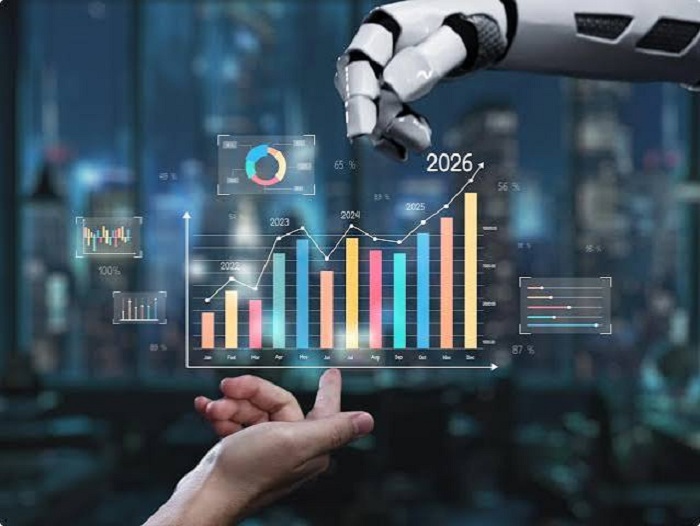
Artificial intelligence is rapidly becoming a core component of modern business strategy. Organizations across industries are using AI to automate repetitive processes, improve customer experiences, accelerate decision-making, and create new sources of business value. However, adopting individual AI tools is not enough to achieve meaningful transformation. Businesses need a structured approach that connects AI with their people, processes, technology, and long-term goals.
This is where AI Transformation Services can help organizations build a sustainable and AI-ready business.
What Are AI Transformation Services?
AI Transformation Services involve the strategic adoption and integration of artificial intelligence across different areas of an organization. Instead of treating AI as an isolated technology initiative, businesses can use these services to identify valuable use cases, modernize technology environments, integrate AI into workflows, and establish the capabilities needed for continuous innovation.
Read More: How a Cloud-Based Phone System Helps Businesses Stay Connected Beyond Office Walls
A successful AI transformation typically combines business strategy, data, cloud technologies, application modernization, automation, and AI engineering. The objective is to create an environment where AI can deliver measurable business outcomes while remaining scalable and responsible.
Why Businesses Need an AI Transformation Strategy
Many organizations experiment with generative AI and other AI technologies but struggle to move beyond individual proof-of-concept projects. Common challenges include fragmented data, legacy applications, limited AI skills, security concerns, and difficulty identifying high-value use cases.
A structured AI transformation strategy helps businesses address these challenges. It can provide a roadmap for prioritizing AI initiatives based on business objectives rather than technology trends.
For example, an organization may use AI to improve demand forecasting, automate software testing, enhance customer support, detect operational anomalies, or assist employees with knowledge-intensive tasks.
Key Components of an AI-Ready Business
Building an AI-ready organization requires more than deploying an AI model. Several foundational elements are important:
- AI Strategy and Use Cases
Businesses should identify AI opportunities that align with measurable business goals. Prioritizing use cases based on value, feasibility, data availability, and risk can help organizations focus their investments. - Data and Technology Foundation
AI depends on reliable and accessible data. Organizations may need to modernize data platforms, applications, cloud environments, and integration architectures to support AI workloads effectively. - Intelligent Automation
Combining AI with automation can streamline repetitive and complex processes. This can help employees spend more time on strategic and creative activities. - AI-Enabled Workforce
Successful transformation also requires people to understand how to work with AI. Training, governance, collaboration, and responsible AI practices can help organizations build confidence and adoption. - Continuous Optimization
AI transformation is an ongoing journey. Organizations need to monitor performance, evaluate outcomes, improve models and workflows, and identify new opportunities as business requirements evolve.
The Role of Business AI
Business AI focuses on applying artificial intelligence to practical business challenges rather than adopting AI simply for experimentation. It can support functions such as customer experience, operations, engineering, finance, supply chain, and enterprise decision-making.
By connecting AI capabilities with business processes, organizations can move from isolated AI experiments toward repeatable and scalable solutions.
How LTM Supports AI Transformation
LTM helps enterprises explore and implement AI-led approaches across their technology and business environments. Its capabilities can support organizations as they identify opportunities, modernize technology foundations, integrate intelligent solutions, and scale AI initiatives.
For businesses beginning their AI journey, working with an experienced technology partner such as LTM can provide access to expertise across AI, engineering, cloud, data, and digital transformation.
Building the Future with AI
AI transformation is becoming an important part of long-term business modernization. Organizations that establish the right strategy, technology foundation, workforce capabilities, and governance can create an environment where AI supports continuous innovation.
Read More: Why Fiber Optic Cable Contractors Matter For San Antonio Commercial Network Expansions
With the right AI Transformation Services approach, businesses can move beyond experimenting with AI and begin integrating intelligence into everyday operations. The result is an AI-ready organization that can adapt more effectively as technologies, customer expectations, and markets continue to evolve.